Technology
We continually evaluate and adopt evidence-based laboratory technologies that support precision and consistency throughout the IVF journey.
Green Park, New DelhiConfidential fertility care
Laboratory excellence
Behind every successful IVF cycle is an embryology laboratory where science, precision and experience come together. At EPIA we have built a laboratory that combines advanced technology, rigorous quality systems and an experienced embryology team — supporting every stage of your journey, from fertilisation to long-term cryopreservation.
Why we invest
People do. Processes do. Consistency does.
At EPIA we continually invest in advanced laboratory technologies, quality systems, research and our embryology team — because every decision made inside the laboratory has the potential to influence embryo development.
We don't adopt technology because it is new. We adopt it because it helps us provide safer, more precise and more consistent fertility care.
We continually evaluate and adopt evidence-based laboratory technologies that support precision and consistency throughout the IVF journey.
Our team contributes to fertility research, presents scientific work at international meetings and integrates emerging evidence into clinical practice.
Our embryologists undergo continuous training and work to rigorous laboratory protocols to maintain the highest standards of care.
Every laboratory process is monitored, documented and continuously reviewed — because excellence comes from consistency, not chance.
Inside the EPIA laboratory
Each area of the laboratory is purpose-designed for a distinct stage of embryology and preservation.
Where eggs are fertilised, embryos are cultured and their development is carefully monitored.
Dedicated sperm preparation and analysis using advanced laboratory techniques.
Specialised workstations designed for ICSI, assisted hatching and embryo biopsy.
Medical-grade cryogenic storage for eggs, embryos and sperm, with multiple layers of monitoring and protection.
The journey of your egg
Hover or tap each step to see what happens along the way.
Step 01 of 10
We review your history and goals to design the right plan for you.
Technologies
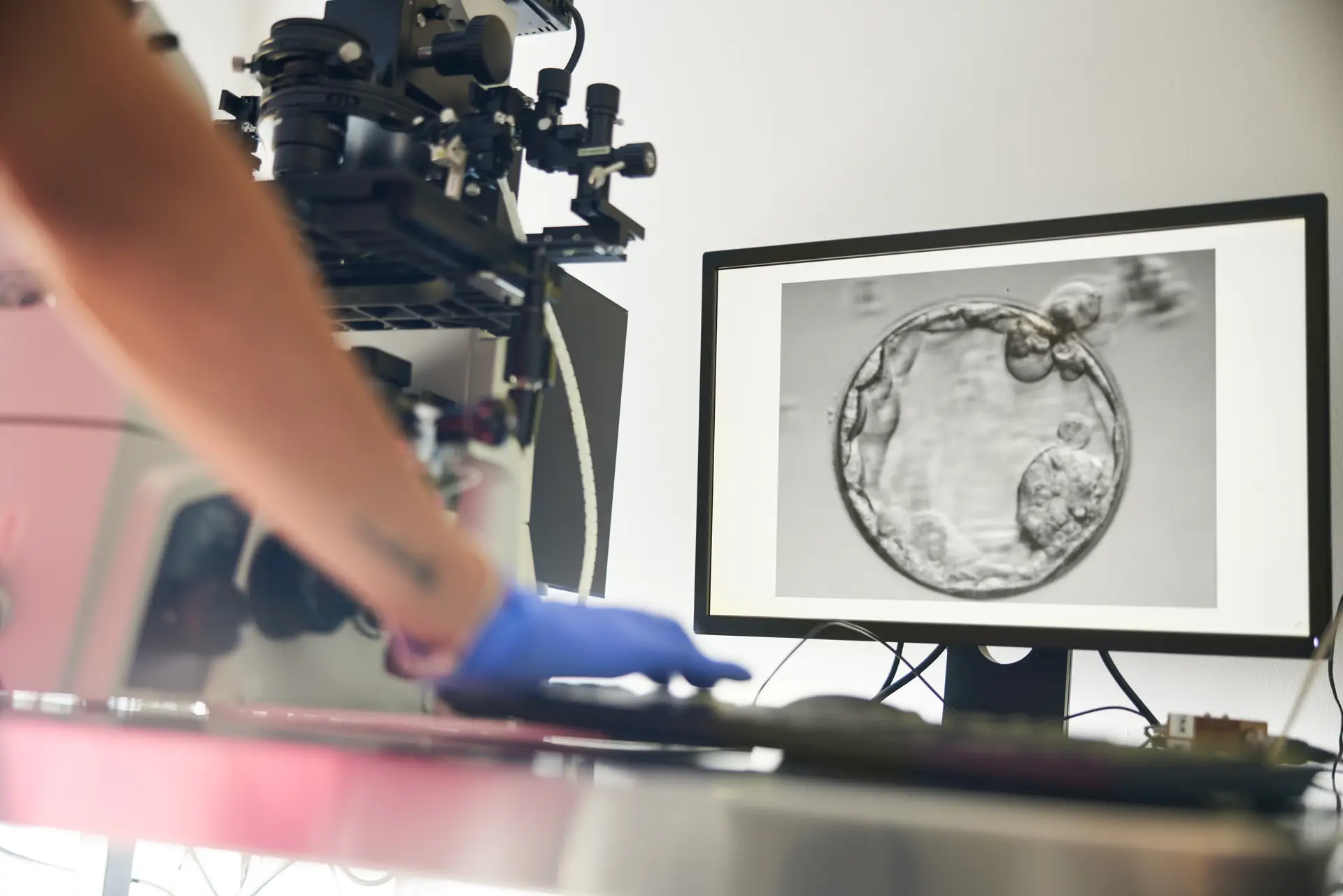
We use EmbryoScope® because embryos develop best in a stable environment.
Rather than repeatedly removing embryos from the incubator for observation, EmbryoScope continuously photographs embryo development while maintaining uninterrupted culture conditions.
This lets our embryologists monitor developmental milestones in greater detail while minimising disturbance during one of the most critical stages of embryo growth.
Our embryologists perform Intracytoplasmic Sperm Injection (ICSI) using precision micromanipulation systems capable of magnifications up to 6,000–7,000×.
This level of magnification allows careful evaluation of sperm morphology and highly precise sperm injection when clinically indicated.
Every movement is controlled using specialised micromanipulators designed for reproductive medicine.
For selected patients we perform Laser-Assisted Hatching using a highly focused infrared laser that creates a precise opening in the embryo's outer shell (the zona pellucida).
The procedure is performed without physical contact with the embryo and may be recommended in carefully selected situations such as previous implantation failure, frozen embryo transfers or advanced maternal age.
Precision is essential — and our laser systems deliver that precision consistently.
We use vitrification because it has transformed fertility preservation.
Unlike traditional slow-freezing, vitrification rapidly freezes eggs and embryos while minimising ice-crystal formation — helping preserve cellular integrity and supporting excellent post-thaw survival.
Whether preserving fertility through egg freezing or storing embryos for future treatment, our goal is to maximise the potential of every sample entrusted to us.
Embryos spend their first five to six days entirely within our laboratory. During that time, the laboratory becomes their environment.
Freezing your eggs takes only one day. Protecting them is a responsibility that continues for years.
We store eggs, embryos and sperm in medical-grade cryogenic tanks at approximately −196°C, supported by:
Research, innovation & continuous learning
We believe the future of fertility care depends on continual learning and scientific contribution. That's why we actively:
Quality without compromise
Every laboratory process is supported by documented quality systems, including:
FAQ
The questions patients ask most about the science behind their care.
At EPIA we have built more than an IVF laboratory. We have built an environment where science, precision and innovation come together to support every possibility.
The information on this page is educational and does not replace individual clinical advice. Outcomes vary between patients; nothing here guarantees pregnancy, egg quality, or treatment success.